

As mentioned in the blog about Back to the Future, some of us in the world had to wait four years before getting the promised sequel. As a five-year-old, I had no idea what it would even be about or why it would take another four years. Sure, we knew we were going to the future but why? Turns out there were a lot of questions and concerns that caused some issues for this highly anticipated sequel.
At this point in time, Hollywood was run by people who actually took chances. They were run on the basis of a good idea rather than a known brand. Universal had made some moderate hits during the 70s but were still struggling financially. Luckily a little film called Jaws came along and became the biggest success the studio had ever had to date. That success helped the studio coast into the 80s bringing in more hits like E.T. and The Breakfast Club but also some surprising bombs like John Carpenter’s The Thing and David Lynch’s Dune. So, when a sure thing came along, the studio decided to give it a bit more attention. Jaws sequels were fairly successful. What else could be sequelized?

Robert Zemeckis and Bob Gale had a wealth of opportunities before them, so they were not thinking about a sequel to Back to the Future. In fact, the ending of the first movie was meant to be a final joke, not a setup to a sequel. But Universal was eager to take Marty and Doc on more adventures and decided to push forward with a sequel, with or without its creators. Upon hearing this Zemeckis and Gale decided to stay involved with the production and even promised Universal two movies. Universal excitedly agreed and pre-production began on Back to the Future part II AND III. We’ll come back to the latter.
It seems the entire cast from the original film was committed to making the sequel long before any scripts were written. All except one actor: Crispin Glover. Various reports seem to indicate that Glover has taken umbridge with the original film’s ending, a point I bookmarked in the last episode. As I said, the messaging at the end of the original film was on brand for the 80s: money equals happiness. Now I know it might not be that cut and dry since you could easily argue that on the surface they seem more successful, but at the end of the day, they still live in the same house and the two oldest kids are still living at home, despite having better jobs. Those are just two simple observations.
During contract negotiations, Glover’s agent asked for fair compensation compared to other actors and script approval. It seems that Glover felt he was being low-balled compared to the other actors saying his offer of $125,000 was half of what Lea Thompson and Tom Wilson were being paid. So in a twist of irony, he demanded $1,000,000. Since the producers were not going to cave to those demands, work began to lessen George McFly’s presence in the film which ultimately led to the character being recast. However, even though the role was recast, unused footage from the previous film was used that featured Crispin Glover, and the stand-in actor, Jeffrey Weissman, was dressed in prosthetics to make him resemble Crispin Glover.
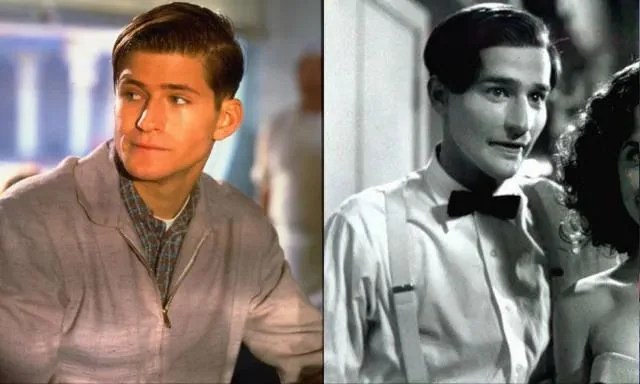
Now, who made these calls? According to writer Bob Gale, these were studio decisions that were out of his control. Yet, Crispin Glover insists that all of this was a personal attack perpetrated by Bob Gale. What’s true? I haven’t a clue. Crispin Glover kind of comes off arrogant at times, as if he’s a true artist and he’s misunderstood or whatever. But on the same token, you have a story from the stand-in Jeffrey Weissman who claims that the bit where George was hanging upside down was not a tactic to hide the fact it was a different actor, but in fact a planned punishment for Glover, due to his behavior in the first flick. I’m not sure what behavior they speak of, outside of one or two minor eccentricities that I’ve read about.
In any case, this all led to a lawsuit that was settled out of court for $765,000 by Universal. Furthermore, it prompted the Screen Actors Guild to create new rules regarding the use of an actor’s likeness. It’s really disappointing that this occurred at all, since having Crispin Glover in the film would have significantly changed the narrative. He was killed off in the script because of this nonsense. So, what would that story have been? I did read about some of the ideas that were pitched. One involved a trip to the 60s where Marty would have encountered his parents as hippies. Could have been interesting but then another encounter would have caused more issues when we all think too much about these films.
I also feel bad for Jeffrey Weissman since, as he tells it, everyone on the set treated him like an outsider. Lea Thompson even referred to him as “The Imposter.” The man was hired for a job just like the rest of the cast. He didn’t steal this role from anyone, so to be treated in this way is ridiculous. So much so that he assisted Crispin Glover in his lawsuit. I don’t know. The guy could be a creep.

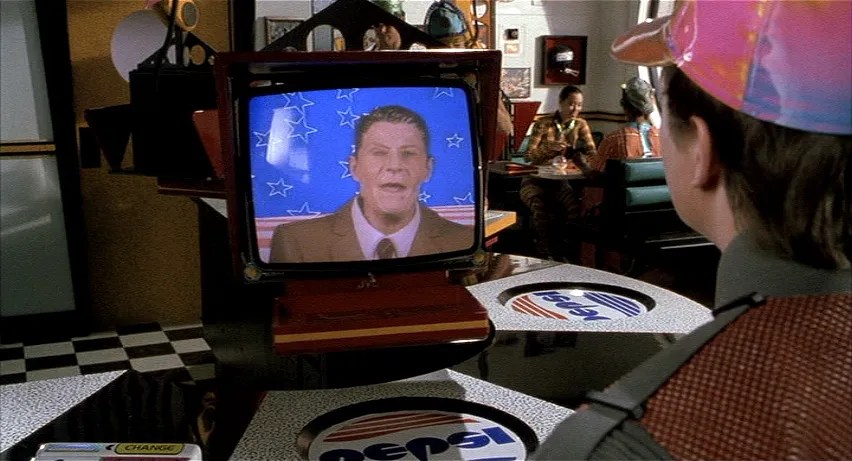
So with all of that out of the way, let’s really get into the flick. My excitement for this flick was through the roof, especially after seeing a trailer. The future they presented was a far cry from all the dystopian futures we had been given so many times before. Flying cars, electronic clothing, hologram advertisements, Max Headroom-themed AI bots running the service industry… it’s everything we could have hoped for and more. Unfortunately, our future got fucked along the way, and we haven’t quite gotten to all of these things yet. But I maintain hope in the face of oligarchy. Moving on.
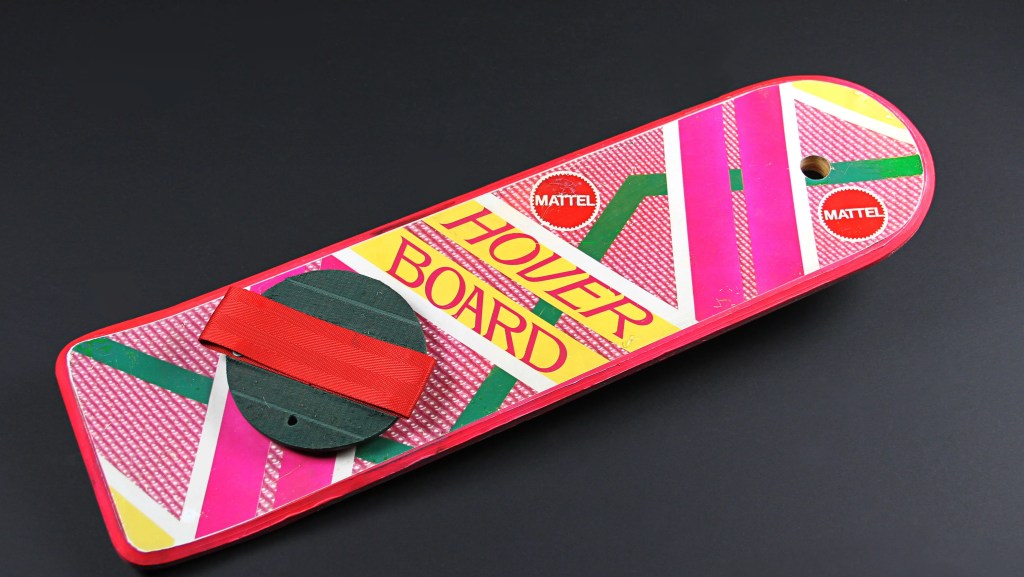
The biggest selling point for a kid my age was the hoverboard. Holy cow! What an invention! I wanted one SO badly and was somehow convinced that they existed at one time in the past but had been pulled from store shelves due to safety concerns. At one point, I thought I made that up in my head because I could find nothing to support this. Fortunately I came across a behind-the-scenes special that featured Bob Zemeckis saying, “they’ve been around for years, it’s just that parent groups haven’t let toy manufacturers make them. But we got our hands on some and put them in the movie.” I was a kid. I didn’t know adults lied so much. In any case, I was obsessed. So much so that the hoverboard became my choice of transportation for the main character of my first comic series. Of course, that comic was littered with references to other things I was into at the time, so it was inevitable.
Like with many things I love growing up, I eventually begin hearing negative comments regarding said thing I love, and that I assumed everyone else loved too. But people had opinions and upon hearing them, it was hard to argue. One issue this film had going in was how to deal with Jennifer. Bob Zemeckis stated that had he known they would go on to do a sequel, they would have not included Jennifer going with them at the end of the first film. And that’s all well and good, but that still doesn’t change the fact that Doc took Marty to the future to change a future event. Like… it doesn’t make sense. It’s like finding out you’re going to be hit by a car in a month, so you travel to the future to push yourself out of the way versus taking that knowledge and not being present in the spot in which you were going to be hit. You’ve taken extra steps for no reason.
Plus, when Doc puts Jennifer to sleep, he claims it’s because she is asking too many questions about the future and no one should know that much about their futures. Even though Marty learns quite a bit about his future while there. It’s a bit of a head scratcher when you really start to think about it and, luckily, I can just let it be while watching. Because going to the future was just a gateway to exploring the future and creating our plot centered around an almanac.
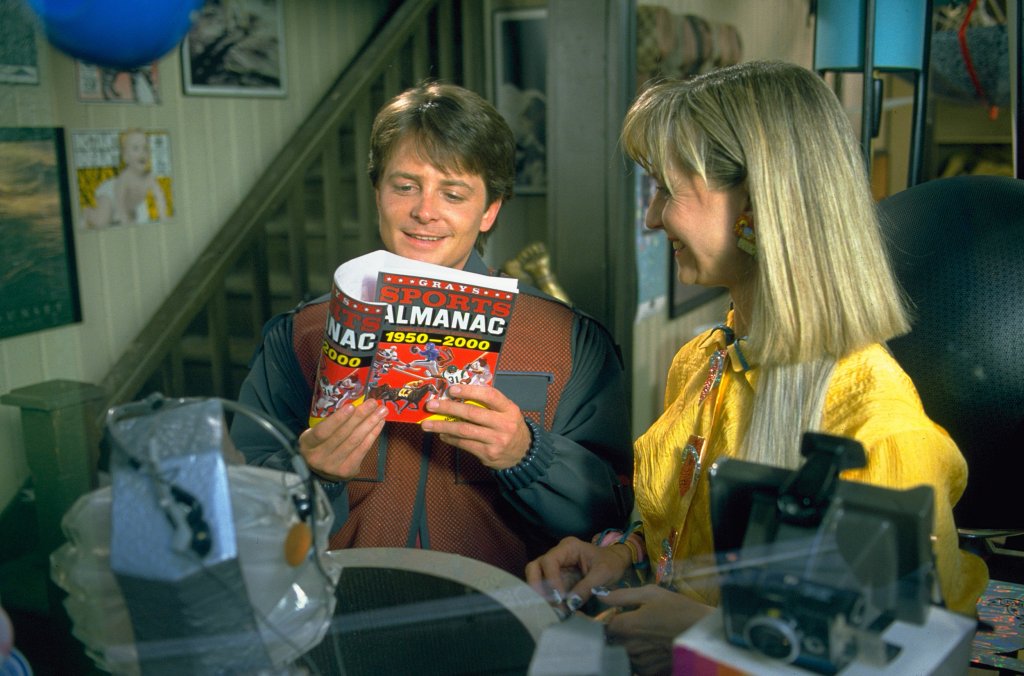
And that’s the part I really dig out of this movie. Where the first film ponders what it would be like to meet your parents as teenagers, this film posits the dangers of time travel, while complicating it in the process. In the first movie, the DeLorean was just a device to help the plot along. Had they not made the time machine so damn cool, I guarantee this film would not have been a franchise. It’s all that damn DeLorean’s fault. We’re not just doing the first movie again, even though they repeat several beats from the first film. I feel as though I’m praising and criticizing at the same time. It’s exhausting sometimes.
As I mentioned in the previous episode, I felt as though the time travel mechanics followed a loose interpretation of the Novikov Self-Consistency Principle, meaning that everything happened as it should and no paradoxes exist. That would then make sense why there are no paradoxes, despite all of us seeing them. However, in this film, we seem to be leaning on the multiverse theory. And you better thank your lucky fucking stars that Zemeckis and Gale own the rights to this franchise because with EVERYONE trying to do multiverse stories right now, Universal would have jumped into the frey with Back to the Multiverse of whatever. The two Martys could have really met!!
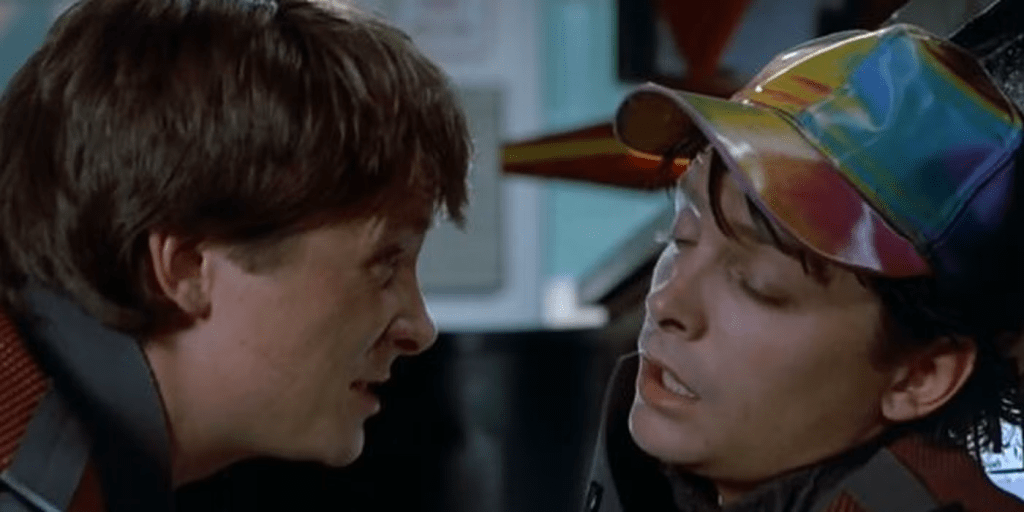
Back in 1989, I had never considered the idea of a multiverse in the scope of how we would view it today. Like, I understood that if you change the past, you change the future. But for whatever reason, I never viewed this concept as multiversal. Now, I see it as clearly as the sky outside. And upon my first viewing, I never expected Doc and Marty to wind up in an alternate version of their timeline.
So, I was very intrigued by this concept. However, as I have aged, I see some inconsistencies with the way it is presented. Like how was Biff able to return to the current 2015 after having changed the past. He should have wound up in an alternate timeline, just like Doc and Marty. Meaning that the DeLorean would have been lost to them in time… and that would have stopped the movie OR given them a harder path to traverse, but ultimately it would have been better for it. I don’t know that for a fact. Just wishful thinking.
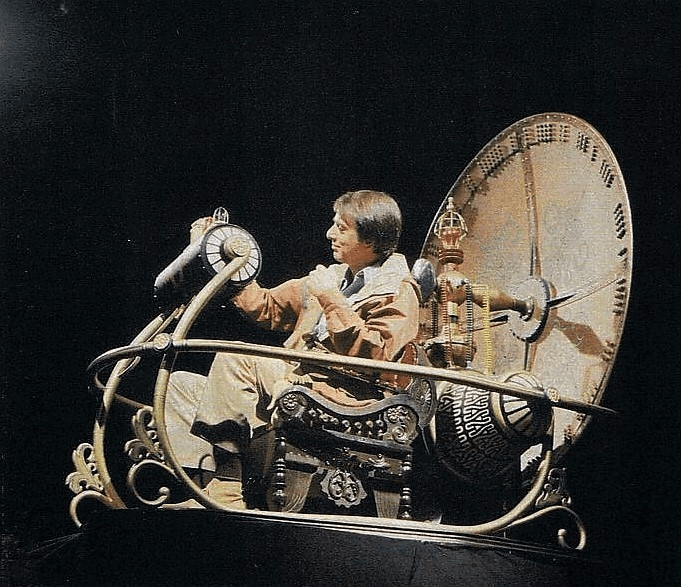
Funny enough, Carl Sagan, who some may know as one of the world’s greatest and probably best-known astrophysicists and others as the pseudonym Doc uses in the past, considered this film to be the greatest time-travel movie ever made, due to its accuracy in handling multiple timelines. I guess Carl Sagan had a time machine of his own.
Another element I enjoy is getting to revisit the first film from a different perspective. While some movies like Avengers: Endgame play with the idea, I feel like here it’s much more in-depth. We see new scenes and interactions with characters we already knew. We see the complications of new Marty being seen by Biff’s gang and then going after original Marty while he’s on stage, leading new Marty to save original Marty before a universe-ending paradox occurs. I find it to be a lot of fun.
While on the subject of different perspectives, in this film we see Doc wearing a brown coat and hat while interacting with his younger self when he’s working on the “weather experiment.” It is said that if you go back to the scene in the original movie, a man with a brown coat and hat can be seen in the background. This is all one big coincidence, BUT one could argue that we saw Doc Brown from 1985 there in the original movie, meaning that the time travel rules go back to Novikov’s Self-Consistency Principle which contradicts everything in the movie.
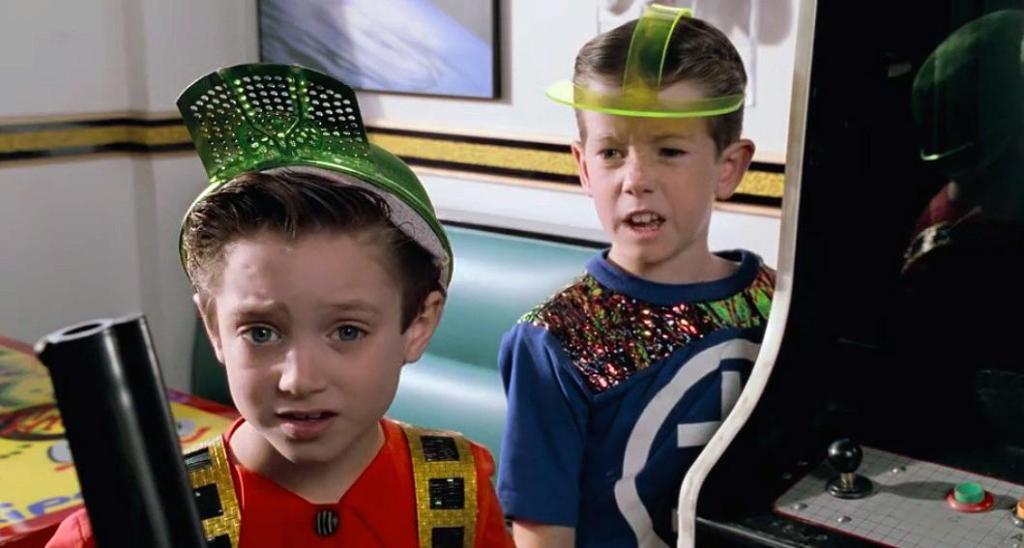
Hey look, it’s little Elijah Wood in his first film role! Claudia Wells is replaced by the wonderful Elizabeth Shue. It’s a minor bit of recasting that I was ok with. Granted, the reasoning behind it was not good as Well’s mother had been diagnosed with cancer. But Elizabeth Shue feels like she has more comedic range which works better for the character in this film. Alan Silvestri is back with the score, although I don’t feel like he does much different here from the original, which feels intentional in some aspects. Did you know that tunnel that Biff drove through when Marty was trying to steal the almanac back was the same tunnel that led to ToonTown in Who Framed Roger Rabbit?… Now you do.

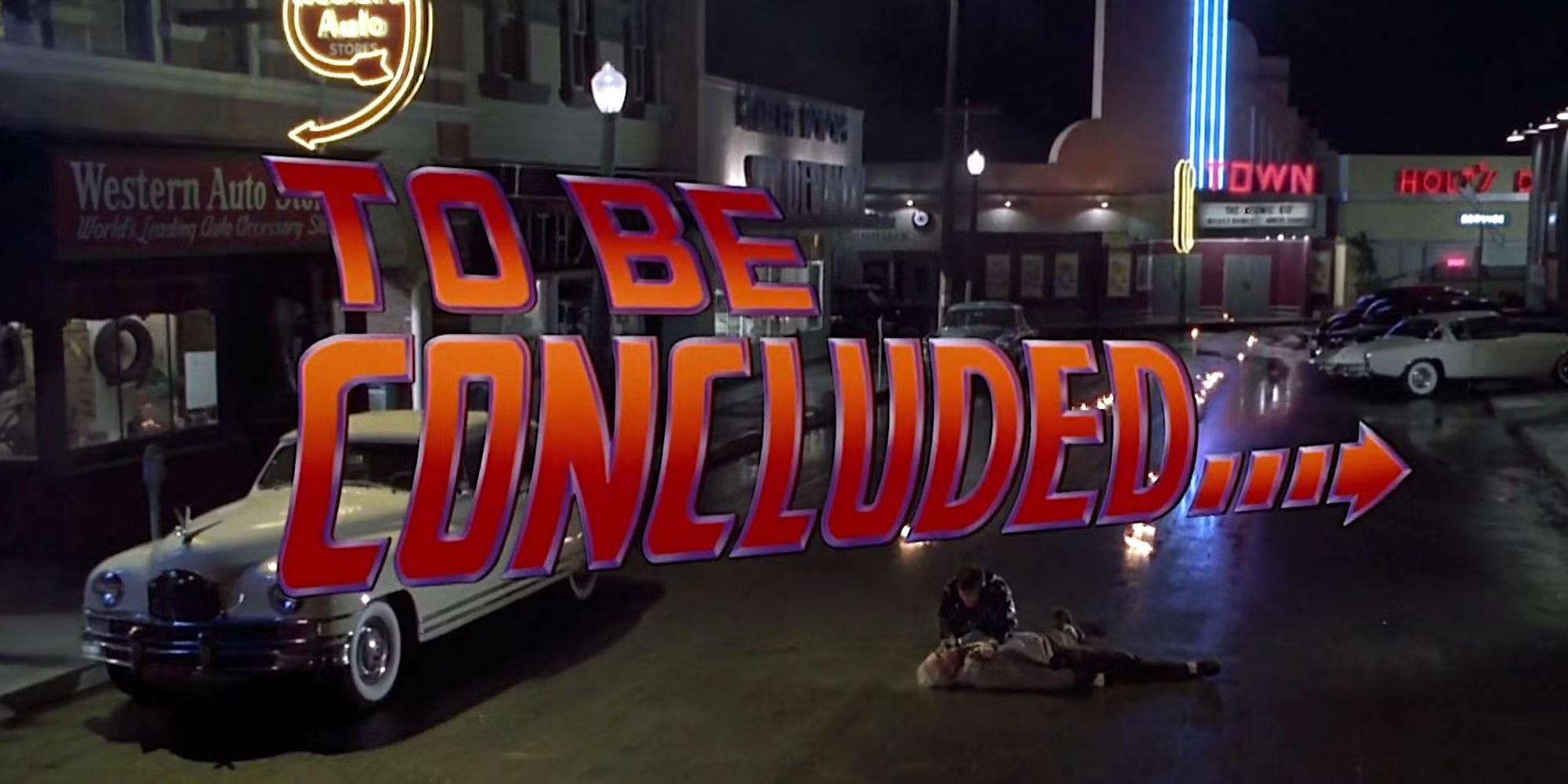
I say that because an early draft of this film combined a number of the ideas of both part II and III. Eventually, they were separated to give the studio two sequels as opposed to one. In separating the ideas, the plan was to film both movies back to back over the course of 11 months. Zemeckis apparently became frustrated with Universal’s marketing department for this film since they did not express to movie-goers that this would be one of two movies. Audiences were apparently pissed when “To Be Concluded…” appeared across the screen before showing a trailer for the next film. This led to a significant drop-off in the film’s second week. Was all of the good will towards the original film now soured by this lack of proper marketing?

 Pencil & Paper Productions